Sabine Neilande*
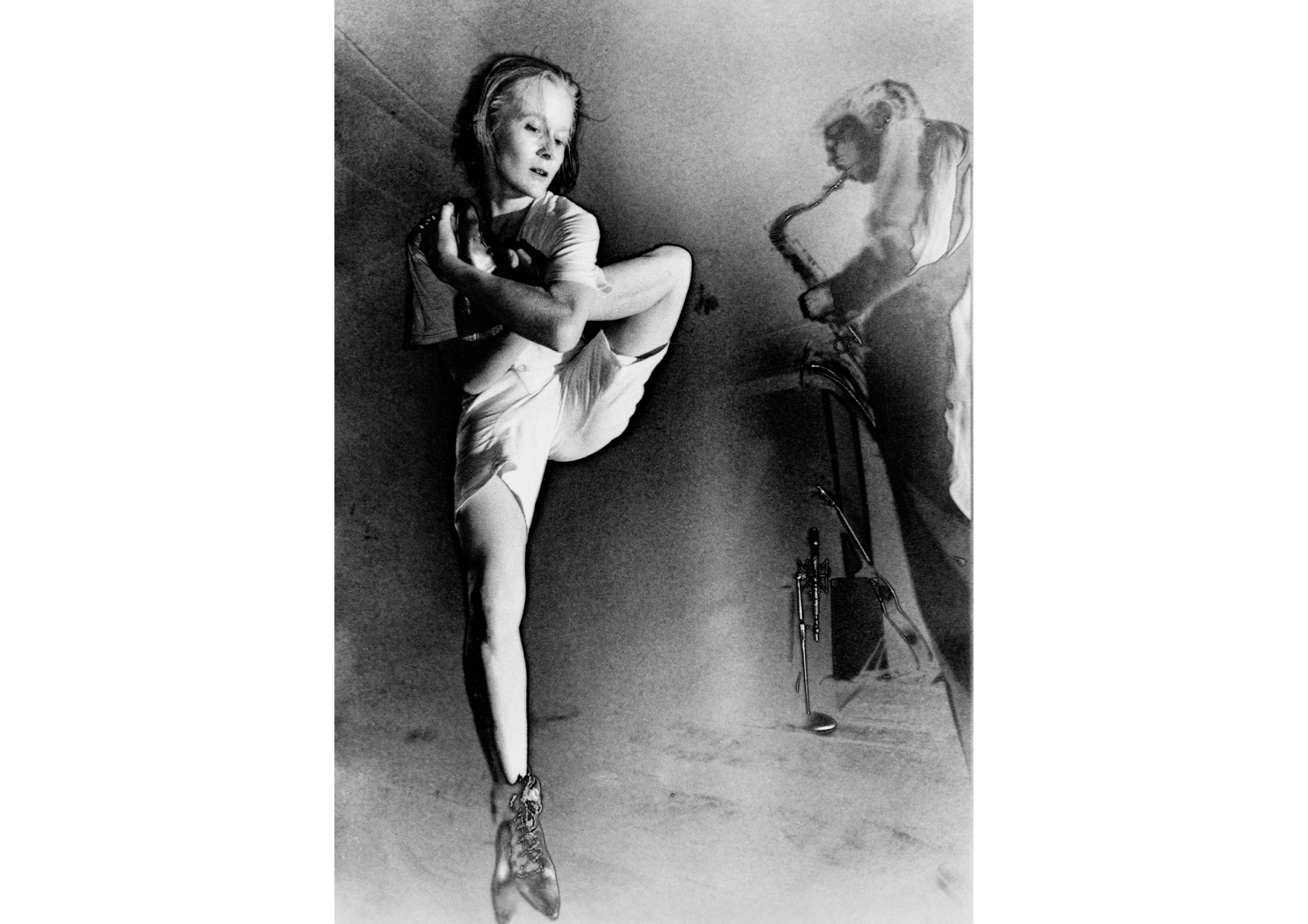
There is something immediately disarming about talking to Kitt Johnson. The Danish choreographer, performer, and festival director talks with the kind of clarity that only comes from decades of trusting the process, “of walking the path”, as she might say, “without always knowing where it leads”. Her connection to Riga runs deeper than it might first appear. She first arrived in 1994, invited by artist and movement theatre leader, Ansis Rūtentālis, to perform in the context of his Movement Theatre, bringing her first solo, Yellow Fever, and leading a workshop alongside her musician Sture Ericson. She speaks warmly about that time, “Discovering everything Ansis had built as an artist, learning how he had created during the Soviet era, and realizing how precious it was to receive feedback from someone so far along in their journey”, while she was just beginning hers. Now, on her third visit, she is back at Riga Circus, running a week-long laboratory for the finalists of Circusnext, a European platform dedicated to developing the next generation of circus arts. We met during one of the final days of the lab, and she spoke with the ease of someone entirely at home, in the building, in the work, in the conversation.
This is your third time in Riga, and your second time at Riga Circus. What is it like to be back in this building?
I first came here in 2018, as I wanted to see a performance I might curate for my own festival. It was just before the renovation, and downstairs it still lingered of tigers being kept in cages. The elephant room was there, and everything was gloriously dirty. And to see it now — my God, it has transformed into a beautiful space. But what moves me most is that you still feel the life of a living circus; you are somewhere specific. You are in a circus building. Someone has been here before you, and you feel it. In Danish, we have a word for the opposite, dødrenovering (death renovation), a makeover so total that you could be anywhere in the world. This is not that; one can yet feel layers of history that are still here. It is truly beautiful.
How would you describe your practice today?
In my core, I am an artist, a choreographer, a performer. But over the years, my practice has grown into many shapes. I work as an outside perceiver, as a mentor, what I call a facilitator of creative processes. I carry out a lot of site-specific work, which tends to be more cross-disciplinary: it starts with a place, a neighborhood, a community, and grows from there. Some years ago, I started a festival, C!CAF, the Copenhagen Circus Arts Festival. The idea came to me from KIT, Copenhagen International Theatre, which had been the great driving force behind contemporary circus in Denmark since the 1980s, and had been conducting a circus festival that they eventually stopped. And I thought, “Copenhagen without a circus festival?” I had spent seven years on the artistic jury of Circusnext and had built the network. Thus, I created one, but deliberately small. Only five works. That allowed me to be really sharp in my curation. I’m comfortable pursuing my own direction, even if it differs from the mainstream.
Alongside the festival, I run a program called Deep Dive, where I ask each artist, “What is important for you at this moment? What would you like to share with the local community?” One person wanted to give a lecture and demonstration of the Cyr Wheel. Another was deep into rope manipulation. Another did a four-hour exploration that ended as a small performance about the act of creation itself. I truly believe that where it ignites the soul for you, it makes sense for other people, too. The feeling of today is to overproduce and overconsume without any means or reason. We have to look for the places where we can contemplate, dive deeper, truly inquire, and not have a deadline on our artistic projects.
The Circusnext lab you are running here this week, how does that work?
I call it a reciprocal workshop, meaning it is based on exchange. Every project receives one full day where we focus only on that work. The artist organizes the warm-up, a sharing of their own basic physical practice, which contributes to what they are creating at that time. Then they workshop something from inside their project, using the rest of us as willing guinea pigs. Afterwards, they show what they have made thus far, it may be one scene, or maybe two improvisations. The aim of it is to receive feedback from the willing guinea pigs and other participants. The beautiful part about it is that a lot of what comes out of one project starts nourishing the others. Someone hears something and thinks, “That is actually valid for my work too.”
You talk about the need to slow down, but the industry pulls in the opposite direction. What happens to artists caught in that tension?
Being an artist, I understand this dilemma very well, and the system sometimes breaks people. Someone might be able to persist the dramaturgical line for twenty minutes, but not for a full hour. The tough part is funding, as it occasionally is quite demanding of the artist. If funding requires an hour, they break their neck on it. So, it is also about trying to stay true to your own pace, what feels right. Which is sometimes hard when you require funding, when you need somewhere to rest and refuel.
How did you first come to the performing arts?
I was an 800-metre runner. I spent all my youth running and training. I went to university, studying sports and biomechanics. Once in gymnastics class, we had a guest teacher from New York, a dancer named Stephen Fant. He conducted a technique class and an improvisation class. The improvisational class was mind-blowing. I thought, what is this? Consequently, I started taking classes. There were no dance classes where I came from, so I went to Copenhagen on the weekends. In the end, I took leave from university and never went back. I was sold. But you have to understand that I was twenty-four, which is late for a dancer to start. I had the physical background, I was super strong, but very stiff, not so delicate in movement. It took some years to reorganize my body, to reinvent it, to rewrite it somehow.
When did mentoring become part of your practice?
I was fourteen when I realized that a new role had been put upon me. Coming from track and field, when you reach a certain age, you are always asked to teach the younger ones. I was doing basic training with the kids who came to the athletics class, and I realized how much I enjoyed it. Back then, I was a trainer; now I am more of a facilitator. The format is different, but the frame is the same, making a space where we can share practice, way of thinking, and way of questioning. And there comes a point where sharing becomes just as important as creating. I feel I have so much flowing through what I call my vertical focus. Why not use it for other people? Spread it.
Vertical focus, can you explain what you mean by that?
When you are young, your prime focus has to be horizontal, going out into the world: discovering, learning, learning, and more learning. As you get older, the focus becomes more vertical. It is about allowing what you have already taken in to go deeper, to be elaborated. They are not opposites; young people also work vertically, and I still move horizontally. But where is the prime drive? For me, now, it is to proceed deeper into what I already carry. And in this work with other people’s projects, I practice it in a new context. What is this concept? Is yet to be determined. And then sparks of enlightenment flow. That is endlessly interesting to me.
What would you say to young artists who are still searching for their own voice?
Trust. To trust one’s own path. My old acupuncture therapist said something once that I try to carry with me, “Our path shows itself as we walk. You cannot predict it. You see it as you walk, but be really aware, because that is when you make the choices. Go step by step. Be true to what you feel, and it will show itself.” I somehow believe and live by that.
Lastly, what still surprises you in the creative process, after all these years?
What surprises me is what, in a way, I already know but tend to forget. When there are more people together working on something, especially on a difficult scene, at a moment’s notice, it suddenly arrives, doof, it has become a piece. Where did it come from? It is because we all put in our energy, our focus, and we are not afraid to doubt it and ourselves, not afraid to try out stupid ideas, because we do not have to prove ourselves when we feel safe. And then something arrives that has nothing to do with any single one of us. It comes from our collective focus somehow. It is a surprise every time. I have to keep repeating it because in the creative process, you are raw and bare, thus forgetting it. I think it happens because we want to control every minor detail. It is the same as the path. You have to trust. The creative process is similar to life; one has to walk it to experience it.
Kitt Johnson is a Copenhagen-based choreographer, performer, and the founder and artistic director of C!CAF, the Copenhagen Circus Arts Festival. She is a mentor within the Circusnext European circus development platform. www.kittjohnson.dk | www.ccaf.nu | www.circusnext.eu
*Sabine Neilande is a Latvian choreographer and dancer.
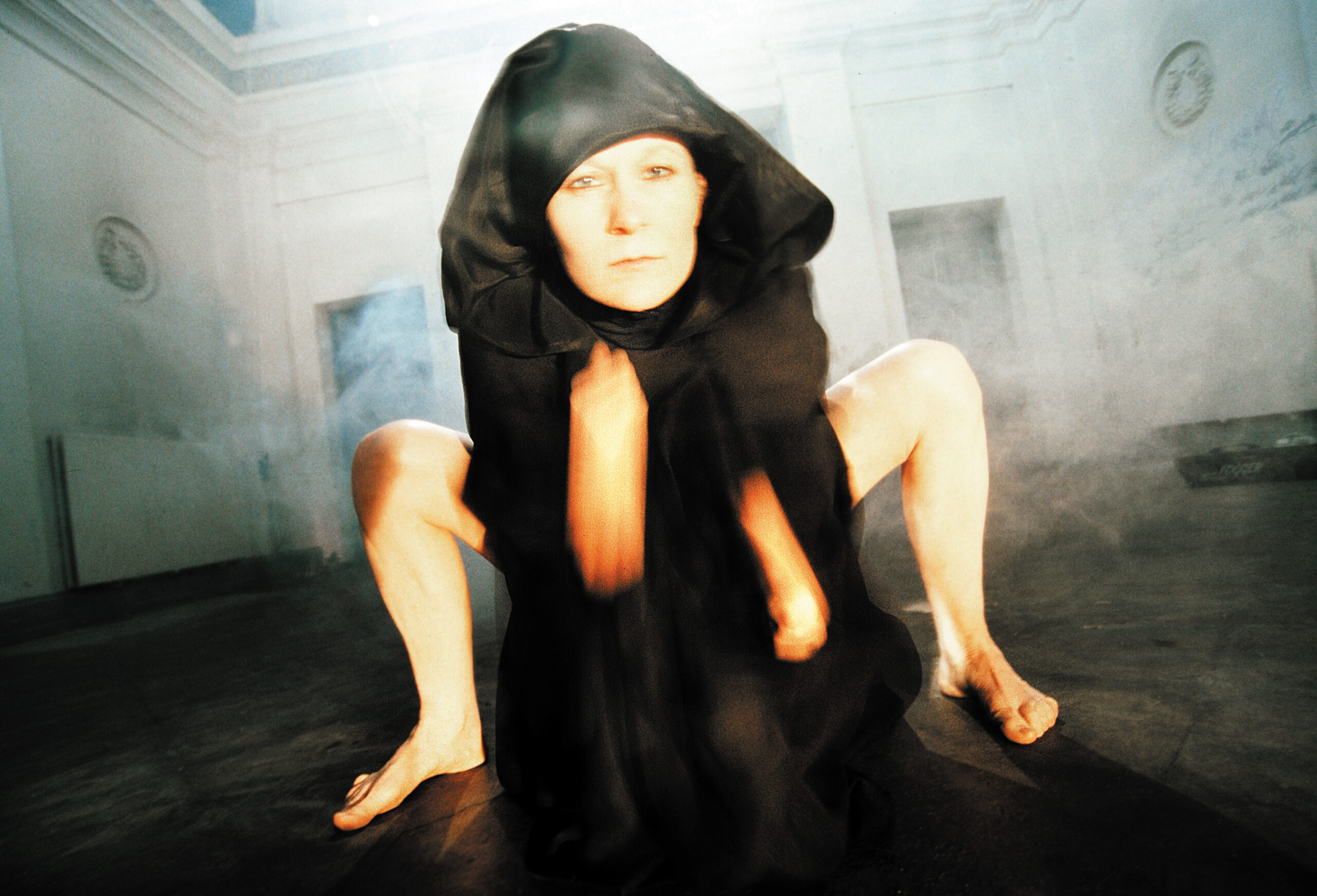
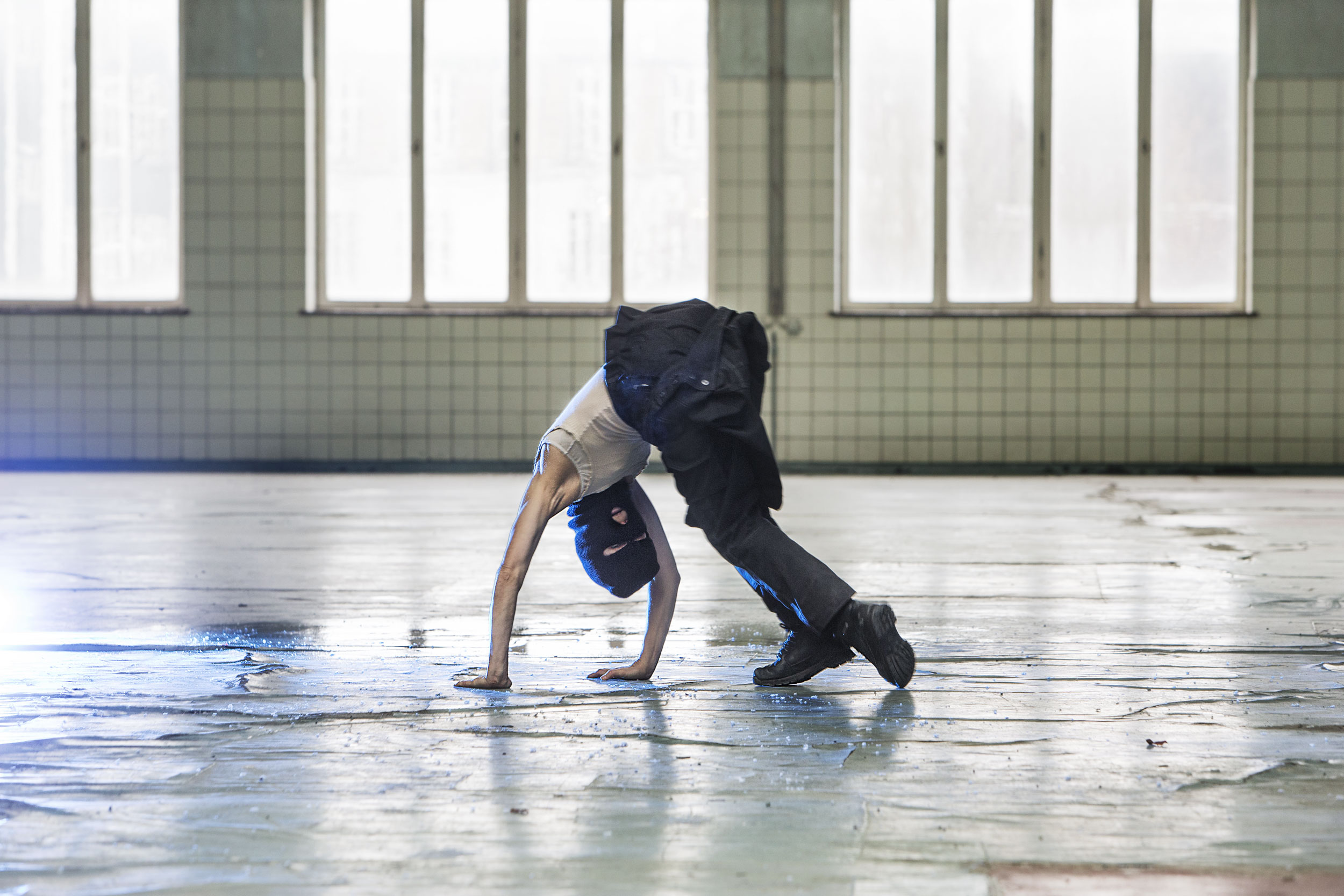
Cover photo: Per Morten Abrahamsen. Solo The Mirror.